Article summary: As the core hub of enterprise data flow and office collaboration, the local area network's stability and security are directly related to business operations. However, hidden dangers such as illegal access to equipment and leakage of sensitive data are often hidden, and risks may arise if you are not careful. “Worker wants to do his job well
As the core hub for enterprise data transfer and office collaboration, the LAN's stability and security are directly related to business operations.
However, hidden dangers such as illegal access to equipment and leakage of sensitive data are often hidden, and risks may arise if you are not careful.
“If a worker wants to do his job well, he must first sharpen his tools”, efficient monitoring methods are the key to protecting the local area network.
2025 In 2018, LAN monitoring technology continued to iterate, providing multiple solutions for different scenarios. Compilation of this article 5 A practical method, from system deployment to rule setting, to help you fully control LAN dynamics and build a strong security defense line.

1. Deploy the Insight MIT system
discerning eye MIT The system is a powerful assistant for LAN monitoring and meets the monitoring needs of multiple scenarios with its rich functions.
Screen monitoring: Real-time high-definition viewing of remote computer screens, supporting single-screen focus and multi-screen switching; The entire screen Video recording, snapshots to freeze key scenes.

Web browsing history: Detailed records of web browsing history, including information such as visited URLs, browsing time and duration. Managers can analyze employees' online behavior through logs and formulate online strategies.

app monitor :Accurate Record The number of times each application is started and how long it is used on the computer etc., and automatically generate software usage reports.
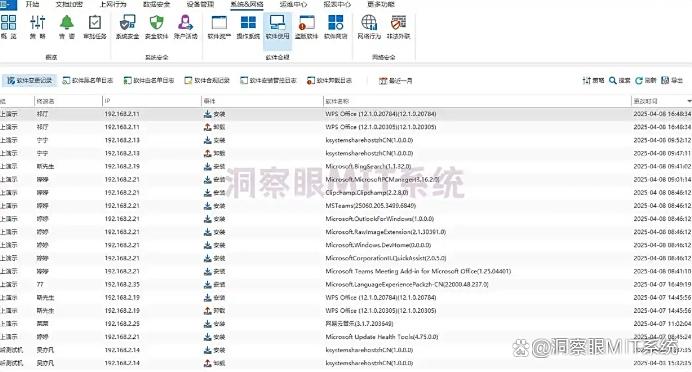
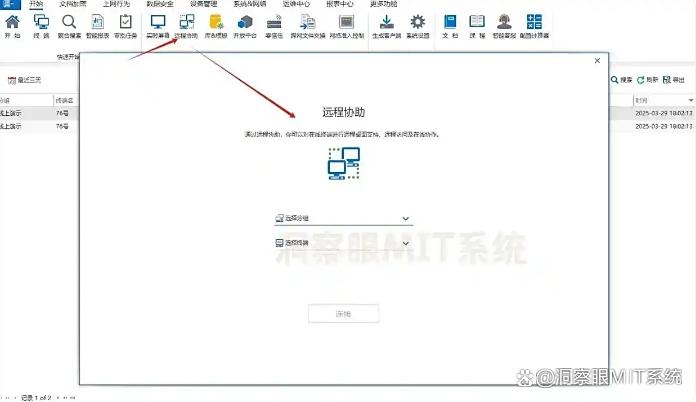
Remote operation and management: Support managers to remotely operate computers in the LAN, such as remotely shutting down, restarting, sending messages, etc. When employees encounter technical problems, administrators can remotely assist in solving them to improve problem handling efficiency.
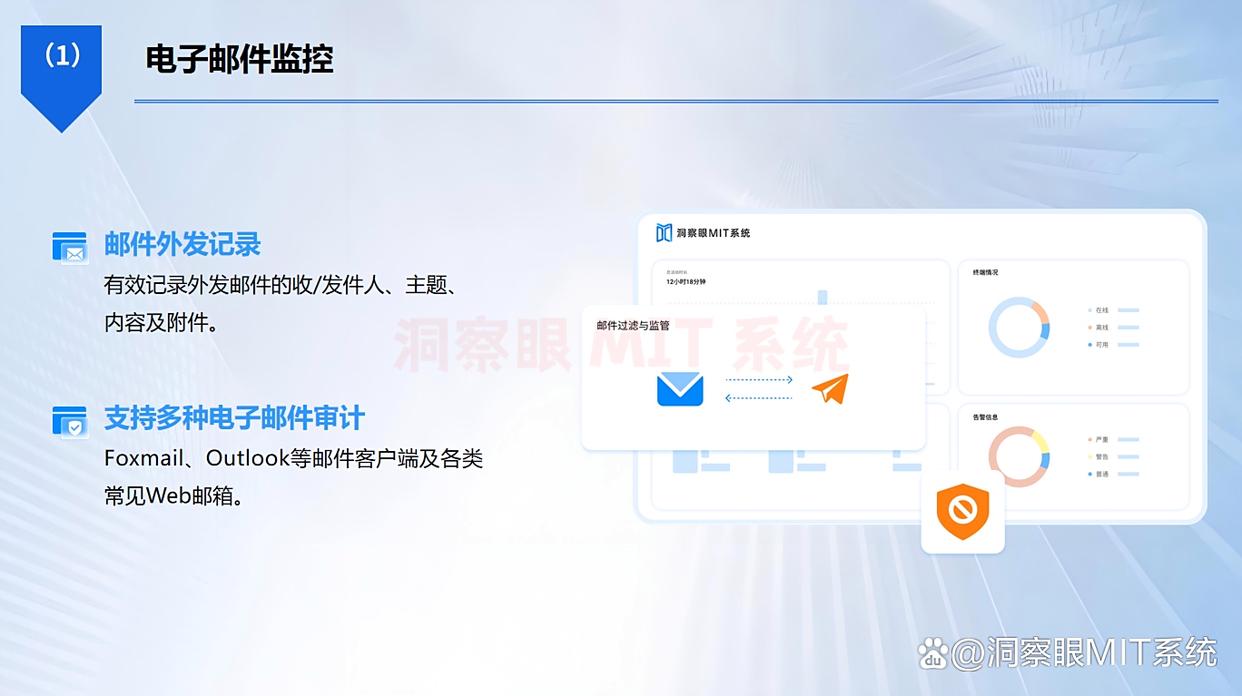
Email monitoring: Comprehensively record the sending and receiving of emails, email recipients, senders, email content, attachment contents, etc. to prevent important documents from being leaked through email.
This system is suitable for all types of enterprises, especially those with a large number of employees and widely distributed equipment. It can help managers effectively control the local area network situation and ensure the stable operation of the network.
2. Use Network Access Control (NAC) technology
Network access control technology is like LAN “"Gatekeeper" to strictly control device access permissions.
Strict device access authentication: Devices trying to access the LAN are authenticated. Only legitimate devices that have passed the authentication can access, effectively preventing unauthorized devices, such as unfamiliar mobile phones and computers, from accessing the network and avoiding security risks.
Dynamic permission allocation: Allocate corresponding network access permissions to access devices based on device type, user identity and other factors. For example, ordinary employee computers can only access specific servers and resources required for work, while administrator devices can obtain higher permissions to ensure the security of network resources.
This technology is suitable for enterprises with high network security requirements, such as financial institutions, government departments, etc. It can control network access from the source and improve local area network security.

3. Use terminal security management software
Terminal security management software focuses on the security protection and monitoring of terminal devices within the local area network.
Vulnerability patch management: Automatically scan system vulnerabilities and software vulnerabilities in terminal devices, and push patches in a timely manner for repair, reducing network security incidents caused by exploited vulnerabilities, such as virus intrusions, data leaks, etc.
Mobile storage device management and control: available U Manage and control the use of mobile storage devices such as hard disks and mobile hard disks, and support multiple mode settings such as prohibited use, read-only, and read-write to prevent the copying of sensitive enterprise data through mobile storage devices.
It is suitable for all enterprises that pay attention to the security of terminal equipment. It can comprehensively improve the anti-risk capabilities of terminal equipment and ensure the security of LAN terminals.
4. Build a log audit system
The log audit system is based on the local area network “Recorder", comprehensively records network behavior logs and conducts analysis.
Comprehensive collection of logs: Collect various types of log information such as system logs, application logs, and network device logs of devices within the LAN, covering various behaviors such as device login, file operations, and network connections to provide complete data for subsequent audits.
Log analysis and early warning: Intelligently analyze the collected logs to identify abnormal behaviors, such as multiple failed logins, frequent access to sensitive files, etc., and issue timely early warnings to help enterprises discover potential security threats.
This system is suitable for enterprises that need to conduct compliance audits, such as medical institutions, listed companies, etc. It can meet the requirements of industry supervision for logging and auditing, and at the same time provide a basis for tracing network security incidents.

5. Set up firewall rules for monitoring
The firewall is for the LAN “"Protection Wall" to monitor and control network access by setting reasonable rules.
Port and protocol control: Based on enterprise needs, manage and control ports and network protocols in the LAN, such as closing unnecessary ports and restricting the use of certain protocols to prevent hackers from invading the network through open ports and reduce the risk of network attacks.
Access policy customization: Develop detailed network access policies and specify which IP The address can access specific network resources, which time periods allow access, etc. For example, prohibiting external IP The address can access the company's internal server during non-working hours to ensure server security.
This method is suitable for all enterprises that require basic network protection and monitoring. The operation is relatively simple, and it can effectively block external network threats and standardize network access behavior within the LAN.

Editor: Reiko


 Insight Eye MIT System


 Hebei Public Network Security No. 13019902001038