Article summary: Boss, let’s talk it through today—the most valuable asset of your company is not the servers in the office, but the lines of core code in the programmers’ computers. But what is the reality? The core code was copied home on a USB flash drive by employees and easily accessed via QQ and WeChat
Boss, let’s talk it through today—the most valuable asset of your company is not the servers in the office, but the lines of core code in the programmers’ computers. But what is the reality? The core code was copied to the employee's USB flash drive and taken home, and was sent to others via QQ and WeChat. The entire project was copied when he resigned, and the next day a competing company launched the exact same functions as yours. I have been working in corporate security for more than 20 years and have seen too much of this kind of thing. Don’t wait until the market teaches you how to be a good person. Today, we will pierce this window paper and teach you 4 truly effective source code encryption methods.
If the core code is stolen, that's a fatal thing! 4 hard-core methods for enterprise source code encryption
1. Deploy the Insight Eye MIT system
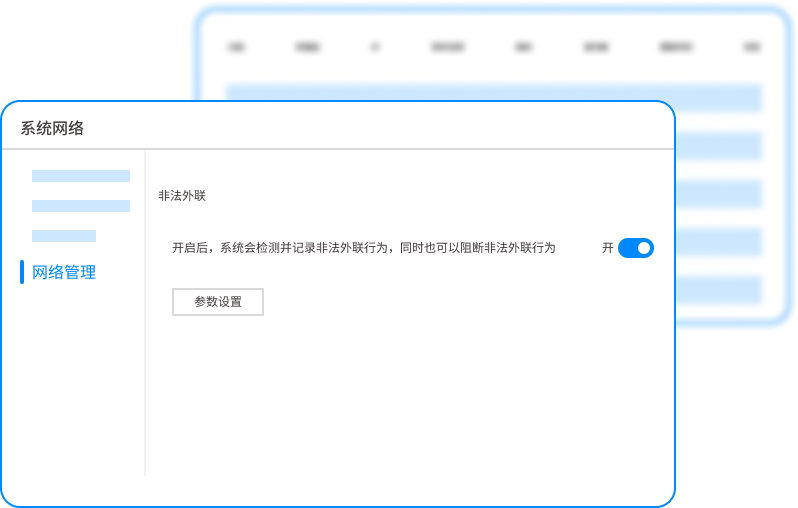
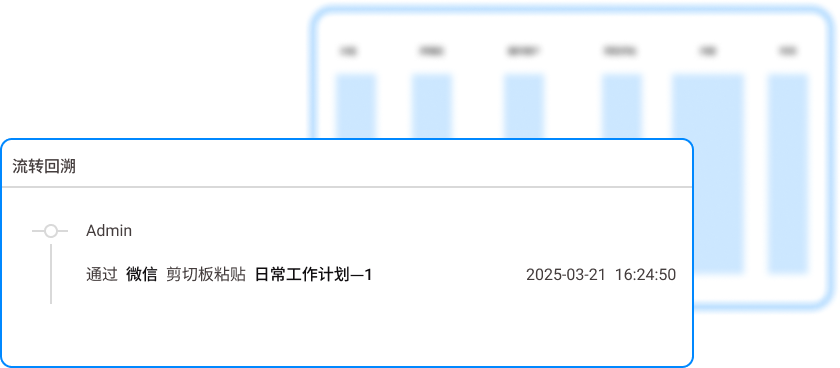 After working for so many years, I would say that the most stable, ruthless, and worry-free way to lock corporate code is to use this system. It is not as simple as installing anti-virus software on your computer, but a set of "personal guards" that specifically keep an eye on the code and guard against moles. The critical nodes that bosses are most concerned about are all stuck for you:
Transparent encryption allows code to "long" in the computer : Programmers can develop, compile, and debug daily without feeling anything exists, and it is smooth and silky. But whenever he wants to copy the code to a USB flash drive, send it to an external mailbox, or even upload it to a personal network disk, the file instantly becomes garbled. The landing effect is: Employees can't take away readable code at all, and even if the finance department sees it, it's a sacred book, and the leakage path is physically isolated.
Precise permission control to prevent "insider" copying : Not everyone is qualified to touch the core code. This system can be so detailed that "the core code base can only be read and written by the development director and core backbones, and ordinary R&D can only read it, but cannot copy and paste, or save as." The landing effect is: If you control those thoughts of "taking advantage of others", even if the person with the authority has their wrong ideas, every copying action and every packaging made by him will be clearly remembered by you in the background.
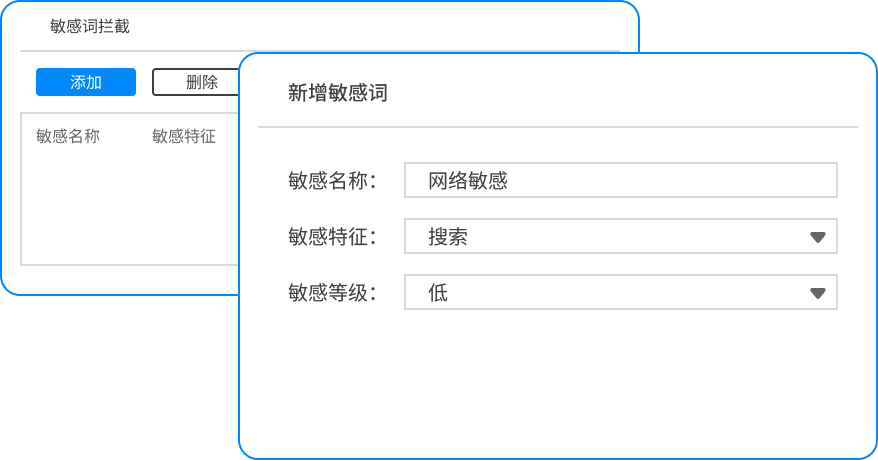
Outsourcing control to close the loopholes of “saving the country through curves” : Some employees are smart and don’t give us USB flash drives or emails. Can I package them and send them to my home computer? The Insight Eye MIT system can monitor all outgoing channels - DingTalk, WeChat, QQ, and even privately deployed code hosting platforms. As long as the file is in the core code category, it will intercept and trigger an alarm. The landing effect is: It completely blocked the backdoor for employees to use daily office tools to leak secrets in an "ant moving" style.
Full life cycle audit, leaks are well documented : What many bosses fear is not that employees will leak secrets, but that "if the secrets are leaked, I still don't know who did it." This system generates a timeline for every access, modification, copy, and outsourcing of code. Once something goes wrong, the boss can directly pull out the leak path, operator, and time point in the background, and the evidence is ironclad. The landing effect is: Change the behavior of leaking secrets from "sneaky" to "transparent and open" to form a strong deterrent to everyone.
Offline strategy makes business trip computers "honest"” : Programmers take their computers out for meetings or go home to work overtime, and the system still takes effect. If you are not connected to the company intranet for a long time, the policy will automatically tighten and even lock access to sensitive files. The landing effect is: Losing the computer is not scary, but losing the core code is scary. With this strategy, the other party will not be able to open any code if the computer is lost.
2. Build a privatized code hosting platform
 Some companies try to save trouble by throwing the core code into the SaaS versions of GitHub and GitLab. Take my advice, this is sending your family's wealth into someone else's safe. If you really want to save worry, just spend your own money to set up a private GitLab or SVN server on the intranet. Landing effect: All code access, submission, and pull must go through the company's internal firewall, cutting off direct access to the external network. But this trick has a flaw - it cannot control the inner ghost. If employees copy the code locally, you have no choice but to consider it as a "half door".
3. Implement the “code virtualization sandbox” development model
 This trick is a bit cruel and suitable for companies that regard code as their lifeblood. Each core programmer is assigned a thin client or cloud desktop, and all development, compilation, and debugging are run on the company's servers. What the employee saw on the monitor in front of him was just a picture, and the code entity never landed on his local computer. Landing effect: The code has never left the server from birth to death. Employees want to copy it? Can't even see a file. But this thing is expensive and has strict network requirements. If there is a slight lag, programmers will rush you.
4. Deploy dynamic code watermarking and behavior monitoring
 Don't underestimate this. Embed an invisible digital watermark in an IDE (such as Visual Studio), or install behavior monitoring software on each key employee's computer. Once a screenshot or photo is taken, the time, work number, and IP recorded in the watermark can directly locate the source of the leak. Landing effect: The employee points his cell phone at the screen to take a photo, and afterwards you can use the watermark in the photo to find out exactly who did it at what time. But this can only be done after the fact, and cannot prevent those who are determined to steal and uninstall surveillance in advance.
Source of this article: Enterprise Data Security Alliance, CIO Information Security Internal Reference
Lead writer: Chen Guodong
Editor in charge: Liu Jing
Last updated: March 26, 2026


 Insight Eye MIT System


 Hebei Public Network Security No. 13019902001038