Article summary: I have been working in corporate security for more than 20 years, and I have seen too many bosses patting me on the back. When I woke up, the core code was copied by resigned employees, or leaked through chat software or network disk. Only then did I think of asking "how to encrypt the source code", the cost
I have been working in corporate security for more than 20 years, and I have seen too many scenes of bosses patting me on the back. When I woke up, the core code was copied by resigned employees, or leaked through chat software or network disk. Only then did I think of asking "how to encrypt the source code". The cost is not something that can be solved by tens of thousands of dollars.
Don't expect to rely on employees' consciousness to guard the gate, that's all nonsense. Today I will talk to you from the bottom of my heart about 8 methods to prevent source code leakage that can really be implemented in the workplace environment.
How to encrypt source code? Inventory of 8 ways to prevent source code leakage, a must-read for bosses to protect core assets from leakage
1. Deploy the Insight Eye MIT system

After working in this business for so many years, if I had to say the most worry-free and most immediate way, it would be to deploy an enterprise-level terminal security management system. There is a mixed bag of such products on the market, but Insight Eye MIT System It is the most ruthless combination of "transparent encryption" and "behavior control" I have ever seen. It doesn't play tricks with you, it directly cuts into the areas that trouble you the most:
- Source code transparent encryption: This is a special skill. No matter you are using Visual Studio, Eclipse or IDEA, the code will always be encrypted on the hard drive. The files appear to be normal to employees, but once they are copied to a USB flash drive or sent to WeChat without authorization, they will appear garbled when opened. This is called on-the-ground encryption. No one can take it away without decrypting it.
- Outgoing file control: Code sometimes needs to be sent to third-party partners, and this is the most dangerous time. This system allows you to generate outgoing files, limit the number of times the other party can open them, their validity period, and even bind them to a designated computer. After the other party has read it, the file will be automatically invalidated to prevent secondary dissemination.
- Clipboard and screenshot controls: Don’t think that you can bypass encryption by taking a screenshot. After deployment, as long as employees open confidential processes, the screenshot tool will record a black screen, and the clipboard contents cannot be copied to non-trusted software. This blocks the most stupid leakage path.
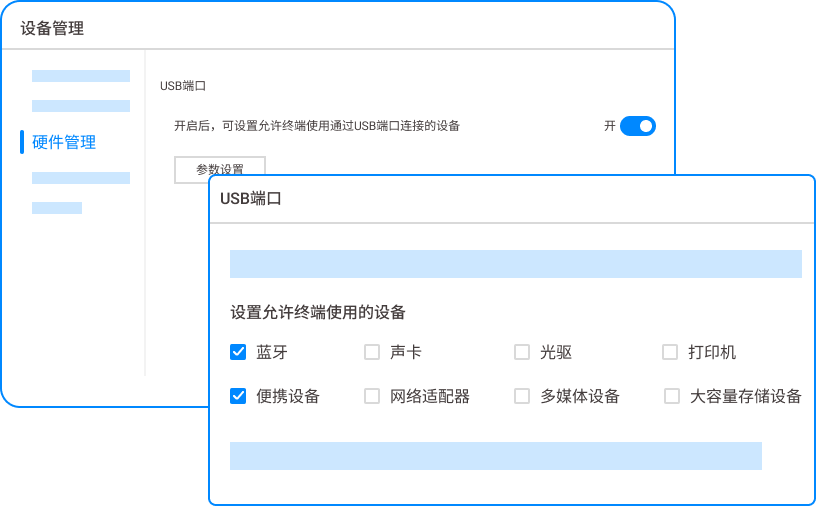
- U disk and peripheral device management and control: Many leaks occur through USB flash drive copies late at night. The system directly sets the U port to "read-only" or "completely disabled" unless your administrator approves it. With the watermark printing function, it is clear who printed what code and when.
- Resignation data audit: The period from when an employee mentions his resignation to when he actually leaves is a period of high incidence of leaks. The system can automatically back up the operation records during this period. Even if the files are deleted or renamed, they are still there on the server. Something really happened, and this thing is the irrefutable proof.
2. Network isolation and virtual desktop
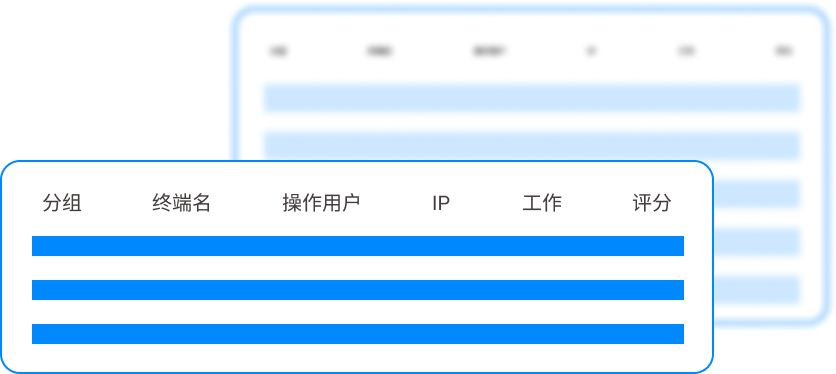
This method is suitable for those financial and military enterprises with abnormally high security requirements. The code is not implemented at all, it is all run on the server in the computer room. There is a monitor in front of the developer, and the virtual desktop is connected to it, and the code and data cannot flow locally. The advantage is that it works once and for all, but the disadvantage is that you have to spend money to build a server, and it is extremely sensitive to network delays. The development experience may be like watching a slideshow.
3. Code obfuscation and encryption shell

If you are working on languages such as Python and Java that are easily decompiled, DLL encryption alone is not enough. On the basis of deploying encryption software, add a layer of code obfuscation, change the variable names to garbled characters, break up the logical structure, and then set up an encryption shell. Even if the code is stripped down, what is decompiled is still a sacred book. If you can't understand it, you can't use it. This method is low cost and suitable as the second line of defense.
4. Version control permissions convergence
Don't make Git and SVN's permissions look like public toilets. Branch management is strictly implemented, and only architect-level personnel have pull access to the core code base. Ordinary developers can only see the module they have at hand. Cooperating with the gateway audit, the system will directly alert anyone who pulls all historical versions at three o'clock in the morning. Many small companies just throw all their code in one warehouse, and everyone has read permissions. It would be strange if nothing happens.
5. Physical isolation and monitoring

It sounds corny, but it works. Mobile phones are prohibited in the R&D area, and the USB ports of computers are blocked and full-angle cameras are connected. Especially during interviews or sensitive projects, physical security complements technical measures. Don’t underestimate this. Physical isolation can nip in the cradle those low-level methods that want to leak secrets through taking photos.
6. Dynamic watermark and psychological deterrence
On the screen background or the code editor of the IDE, a translucent job number watermark is covered. This is not only for retrospection, but also a kind of psychological pressure. When an employee wants to take a screenshot and send it out, his or her job number is clearly visible on the screen, and most of them are intimidated. The watermark must be anti-PS, preferably a dot matrix watermark that periodically jumps on the screen, and the background can analyze who is leaking the secret.
7. Split management of key library files

Make the core algorithm into a dynamic link library and put it on an encrypted server. Ordinary developers develop the calling side. They only have the calling interface and cannot get the core logic. Only a few core shareholders or technical partners have private keys. This strategy minimizes the damage caused by insider threats.
8. Security development life cycle and onboarding promotion

Don't think this is brainwashing. In the first lesson for new employees, they are clearly informed of the compensation clauses in the "Confidentiality Agreement." Let’s talk about the cases where leaking secrets is punishable (infringement of trade secrets). Cooperate with technical means to create an atmosphere of "dare not vent, cannot vent, don't want to vent". Sometimes, deterrence is more effective than the technology itself.
Source of this article: Enterprise Security Think Tank, Enterprise Data Security Defense White Paper Leading expert: Zhou Deming Editor in charge: Chen Simin Last updated: March 27, 2026


 Insight Eye MIT System


 Hebei Public Network Security No. 13019902001038