Article summary: Having been in the business industry for more than ten years, I know it all too well. When it comes to encrypting files, what many people think of is right-click properties, compressing a package and setting a password. Brother, if this could prevent leaks, I would be out of a job long ago. Really golden
Having been in the business industry for more than ten years, I know it all too well. When it comes to encrypting files, what many people think of is right-click properties, compressing a package and setting a password. Brother, if this could prevent leaks, I would be out of a job long ago. The core code that was spent with real money, the customer data that was kept at the bottom of the box, and the plan that took several months of hard work were copied away by employees with a USB flash drive, or with a QQ message. I have seen that kind of pain too many times. Let’s not talk nonsense today, let’s go straight to the hard stuff. The title recommends 5 methods. I will use my decades of experience to tell you what is the best way to make your boss sleep well at night.
Don’t run naked when it comes to code security! 5 core file encryption methods to eliminate leaks from the source
1. Deploy the Insight Eye MIT system

After working in this industry for twenty years, I dare to say with a pat on my chest, for an enterprise like ours that regards code as its lifeblood, don’t bother with those free gadgets. Directly to enterprise-level management and control, Insight Eye MIT System This is the hardest and most powerful combination of punches I have ever used. It is not as simple as adding a lock to a file, it builds a "treasury" in your entire development environment.
Source code is transparently encrypted to prevent copying without any sense of implementation. : There is no need to change any development habits of programmers. The code in Visual Studio and Java IDE will appear as clear text on the local hard disk, but as long as it leaves the authorized environment, whether it is copied to a USB flash drive, sent via WeChat, or even uploaded to a private cloud disk, it will immediately become garbled. For one of our previous customers, a resigned employee secretly copied the entire source code, but the competitor could not open it because it was an encrypted file. Without our authorization environment, it was just a piece of waste data.
Approval for outsourcing core code to eliminate backdoors : The R&D manager wants to send code to the outsourcing partner? OK, go through the approval process. The system supports the creation of "outgoing files", which can accurately control how many days the other party can view, how many times it can be opened, whether it can be printed, and whether it can take screenshots. When the time is up, the file is automatically destroyed. This trick blocks all the paths of "good intentions leading to bad things" and "insiders deliberately leaking secrets".
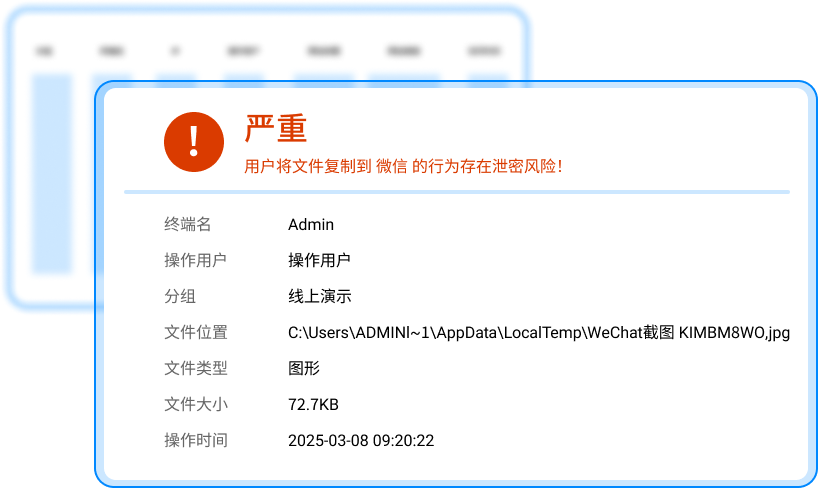
Full-scenario behavioral audit, who touched my code? : Don’t wait until something goes wrong before checking the surveillance. The system background records the operation track of each file in real time: who accessed the core server, who copied 300 files to the mobile hard drive at three in the morning, and who tried to take a screenshot of an encrypted document. These abnormal behaviors trigger thresholds and push alarms directly to your mobile phone. You don't even need to be at the scene to know who is doing the "little tricks."
Refined authority management and control to minimize leakage areas : Boss, think about it, does all research and development have to look at the code of the entire project? No need. The Insight MIT system can cut permission granularity to "single files". The architect can see everything, and ordinary developers can only see the module he is responsible for. Even if his account is stolen, the hacker will only get a bunch of fragments and cannot put together a complete project. This is much safer than putting all the company's eggs in one basket.
Server data access control, cutting off remote theft hackers : Many leaks start on the server side. After this system is deployed, only compliant computers with the client installed can access SVN and Git servers. Do employees use their own laptops or use remote desktop to connect and want to drag code? There are no doors. The possibility of external intrusion and internal illegal simulated access is eliminated from the source.
2. BitLocker and EFS encryption that comes with Windows

Some bosses said, if we don’t want to spend money, how about using the system’s built-in system? OK, but you need to know where its boundaries are. BitLocker is "full disk encryption". If the computer is lost and the hard disk is removed and the data cannot be read, this method is very effective in preventing physical theft. EFS is "file-level encryption", which can be set by right-clicking in NTFS format. But where is the pain point? Management costs are too high. If an employee leaves without telling you the password, or he reinstalls the system and loses the key, even you can't open those encrypted files. For small teams of less than ten people, this method can be used ; At scale, you have to assign a dedicated person just to maintain these keys, and the gain outweighs the loss.
3. Compression software encryption password (WinRAR/7-Zip)
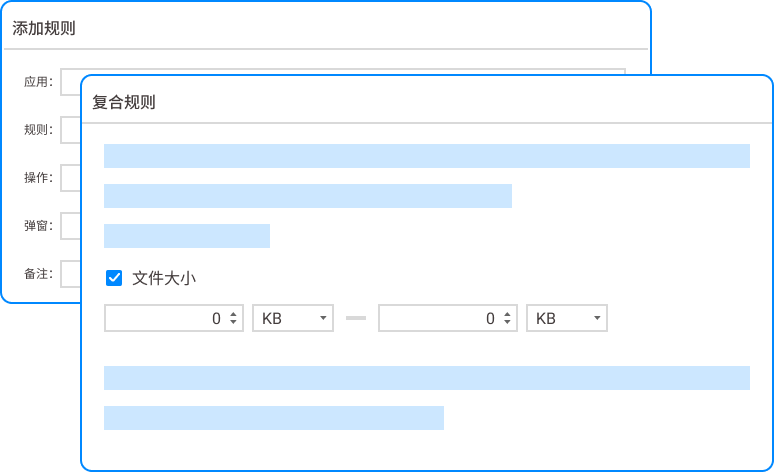
This may be the most commonly used method by our management. Pack the folder into a package, set an 8-digit password, and send it to others. But Lao Li, let me tell you the truth, in front of people who know a little bit about technology, this trick is no different from paper. There are a lot of cracking tools on the Internet, such as running dictionaries and brute force cracking. For slightly more complex passwords, it is just a matter of time. Besides, if you send your password to the other party via WeChat, WeChat itself is not safe. It's okay to issue an ordinary contract in an emergency. If you use this method for core source code or financial data, it is equivalent to running naked on the highway, and the risk depends entirely on luck.
4. Document collaboration software with built-in encryption function

Many companies now use SaaS office software, such as some professional versions of WPS or enterprise cloud disks, which also provide document encryption and permission control. The advantage is that it is convenient, and you can set up who can read and who can make changes online. The disadvantages are more fatal—— data sovereignty . Do you dare to put a top-level core asset like code on someone else's server in plain text? If the SaaS service provider is breached, or if internal personnel operate illegally, you won't even be able to find a way to protect your rights. Is this method suitable for non-core administrative and financial documents and core code? I don't recommend you play like this.
5. Hardware encryption lock (U disk/dongle)
In the early years, the finance and design industries loved to use this trick. The core file must be inserted into a specific USB flash drive or dongle to open it. Physical isolation looks pretty cool. But in a software development environment, the practicality is very poor. We have dozens or hundreds of programmers, and if each one has a dog, the development efficiency will drop by half. Besides, what should I do if the dog is lost? What should employees do if they take it home and secretly decrypt it? This kind of physical hardware control has almost no restraint on subjective malicious leaks by insiders. It is more suitable for "copyright protection" or "special equipment authorization" and is not suitable for daily management and control of all employees' code assets.
After working for so many years, I have seen too many bosses take detours on encryption because they are "afraid of trouble" or "want to save money." When something goes wrong, it's not just the code that's lost, it's the lifeblood of the entire company. Which tool to choose depends on your own risk tolerance, but at least you have to know it in your mind. Don't wait for the code to appear at the opponent's press conference before you take advantage of it.
Source of this article: Enterprise Information Security Alliance, senior security consultants’ practical sharing
Leading expert: Li Jianjun
Editor in charge: Wang Haiyan
Last updated: March 28, 2026


 Insight Eye MIT System


 Hebei Public Network Security No. 13019902001038