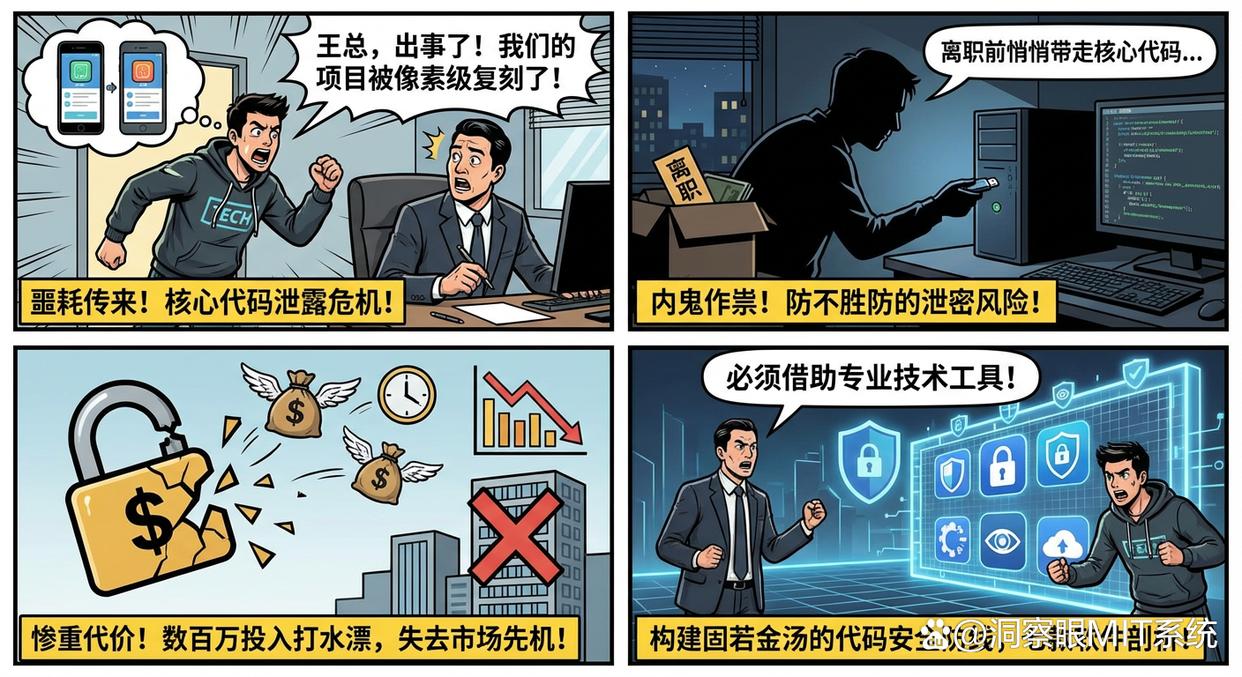
Article summary: "Mr. Wang, something happened! The project we were developing half a year ago now has an identical product on the market, with functions, interfaces... almost a pixel-level replica! ”The technical director rushed into the office, his face pale. Mr. Wang felt "thumping" in his heart.”
“Mr. Wang, something happened! The project we were developing half a year ago now has an identical product on the market, with functions, interfaces... almost a pixel-level replica! ”
The technical director rushed into the office, his face pale. Mr. Wang's heart skipped a beat. He knew that this meant that the company's months of hard work had been wasted, and millions of R&D investments had been wasted. What was even more frightening was that they had completely lost their market opportunity. After emergency investigation, it was finally discovered that the problem lay with the core programmer who resigned a month ago. When he left, he quietly took away the company's core product source code.
This is not an alarmist story, but a bloody reality that many technology and software companies are facing today. Source code, as the core digital asset of an enterprise, will be devastating if leaked.
So, faced with the inevitable risk of leaks, how should companies protect their "lifeblood" - source code? Simply relying on non-competition agreements and professional ethics constraints is far from enough. Professional technical tools must be used. Today, we will give you an in-depth analysis of seven different types of source code leak prevention software to help you build an impregnable code security defense line.
1. Insight MIT system (integrated terminal anti-leakage platform)
This is a terminal data security management platform with extremely comprehensive capabilities. It is not just for source code, but provides enterprises with a complete solution to protect all core data from the source. For source code leakage prevention, it covers almost all key links and is the cornerstone of building a defense system.
Main functions:
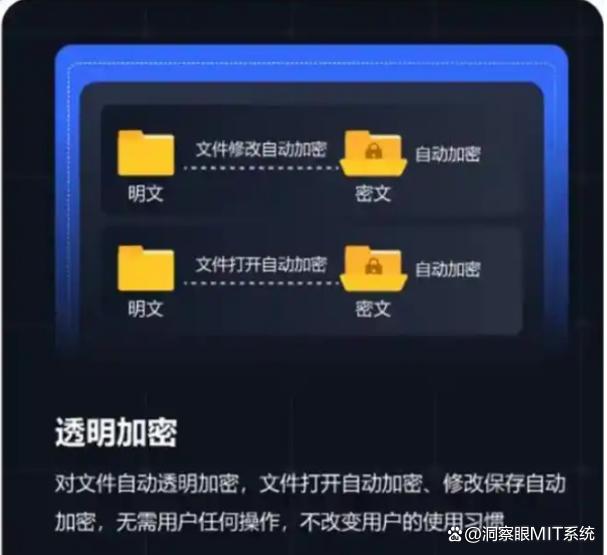
Document transparent encryption: Using driver layer transparent encryption and decryption technology, source code files are encrypted forcefully and imperceptibly. The file can be used normally within the authorized environment. Once it leaves the environment (such as being copied or sent out), it will become garbled code that cannot be opened, which fundamentally ensures the security of code storage.
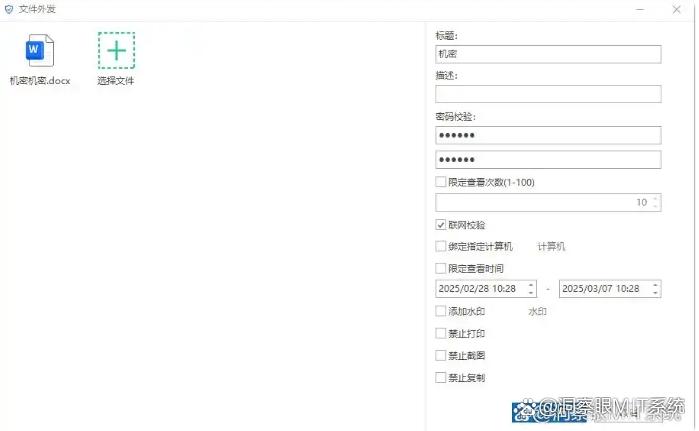
File outgoing control: Precisely control the behavior of files sent out through all channels such as instant messaging software, email, browsers, and network disks. It can be banned completely, or an approval process can be set up to ensure that every outbound shipment is under control.
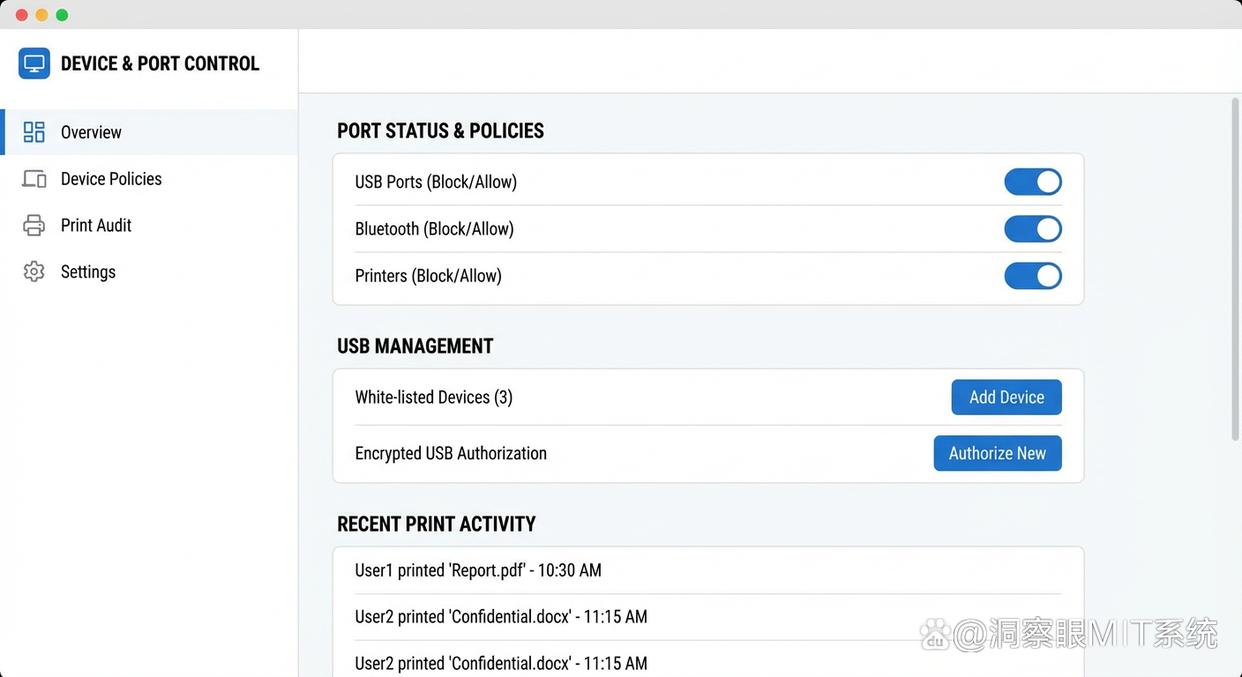
Device and port management and control: Able to strictly control U disk, mobile hard disk, printer, Bluetooth, USB port, etc. U disk whitelist can be set, U disk encryption can be authorized, and printing behavior can be audited in detail to prevent leaks through physical channels.
Clipboard control: Ability to monitor and limit the use of the clipboard. For example, you can prohibit copying the contents of an encrypted code file to unauthorized programs (such as private mailboxes, chat windows).
Behavioral auditing and AI analysis: All file-related operation logs are recorded in detail, and high-risk leaks can be intelligently analyzed through the AI Pro service to issue early warnings.
2. NetFerry (Secure File Exchange Platform)
When an enterprise needs to legally exchange code or technical documents with external customers and partners, a secure file exchange "transit station" like it comes in handy. It focuses on solving the security and controllability issues in the "going out" phase of data.
Main functions:
Secure sending, receiving and approval: Provides an enterprise-level secure document sending and receiving box. All documents sent externally can be forced to enter the approval process. It supports multi-level and multi-person countersignatures to ensure process compliance.
Advanced permission control: When files are sent out, a variety of security policies can be attached, such as setting extraction codes, limiting the number of downloads, setting the file validity period, prohibiting secondary forwarding, etc.
Destruction after reading and anti-leak reader: For highly confidential documents, the "burn after reading" mode can be enabled, and a dedicated outgoing document reader can be used to prohibit the recipient from copying content, printing, and screenshots, and to display anti-counterfeiting watermarks throughout the process.
Sensitive content identification: The built-in DLP engine can automatically scan whether files contain preset sensitive keywords or code fragments when they are sent out, and automatically block high-risk files or switch to manual approval.
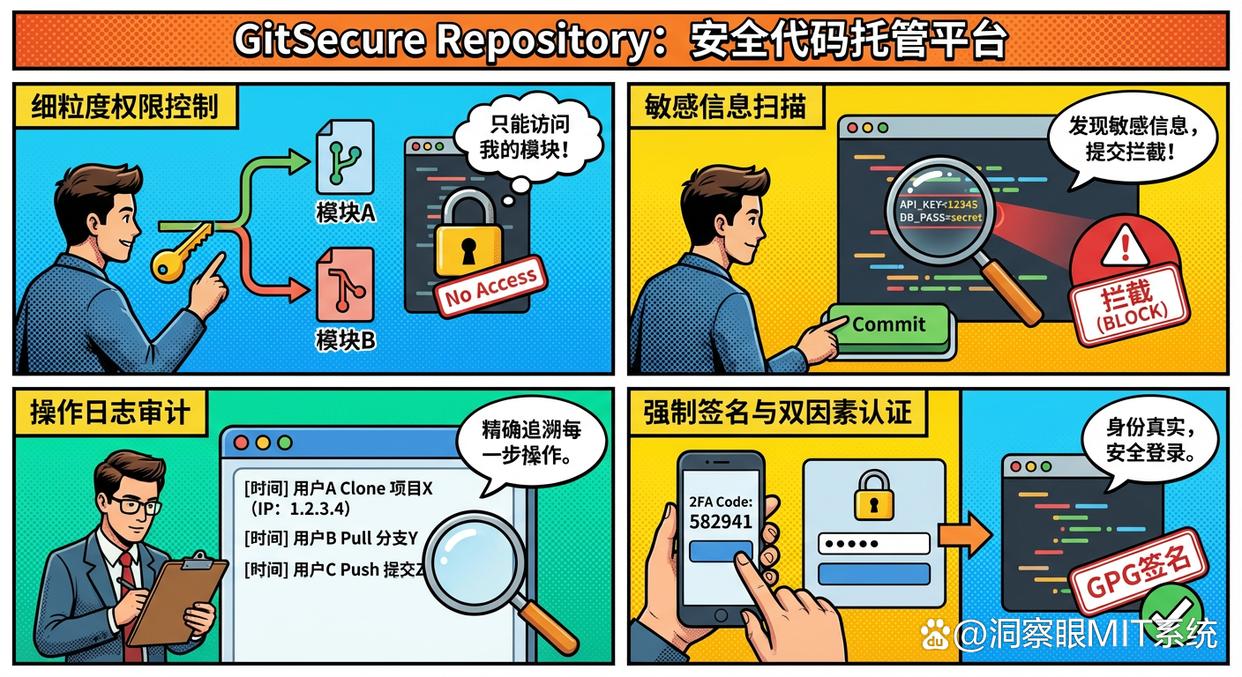
3. GitSecure Repository (secure code hosting platform)
For development teams, code version control systems such as Git are central to their daily work. It is based on traditional Git and adds a large number of security features, specifically designed to prevent source code from being leaked during development and collaboration.
Main functions:
Fine-grained permission control: Fine-grained read and write permissions can be set for the code repository (Repository) and branch (Branch) to ensure that developers can only access the code modules they are responsible for.
Sensitive information scanning: Automatically scan when the code is submitted (Commit) to check whether sensitive information such as database passwords and API keys are inadvertently hard-coded in the code and intercept it.
Operation log audit: Record every code clone, pull, and push operation in detail, accurate to the person, time, and IP address to facilitate security auditing and traceability.
Mandatory signatures and two-factor authentication: It is mandatory that all code submissions must be signed by GPG to ensure the authenticity of the submitter's identity. At the same time, two-factor authentication (2FA) is required to log in to the platform to improve account security.
4. Sentinel UBA (User Behavior Analysis System)
“"Insider" threats are often more difficult to guard against than external attacks. Systems such as Sentinel UBA focus on discovering potential threats by analyzing "human" behavior. It is like an intelligent "security analyst" that monitors abnormalities 24/7.
Main functions:
Behavioral baseline modeling: Establish a normal work behavior model for each employee, for example, which code is accessed every day, during what time period it is active, and what is the usual amount of data operations.
Abnormal behavior warning: Once an employee's behavior deviates from their normal baseline, such as suddenly accessing a large amount of core code late at night, trying to send files out from multiple channels in a short period of time, trying to access code libraries outside their permissions, etc., the system will immediately issue an alert to the administrator.
Risk scoring and profiling: Quantify the risk level of each user and generate a user risk profile to help the security team quickly locate high-risk personnel.
Threat scenario tracing: When a security incident occurs, all operations of the user in the period before the incident can be traced back to form a complete chain of evidence to facilitate investigation and evidence collection.
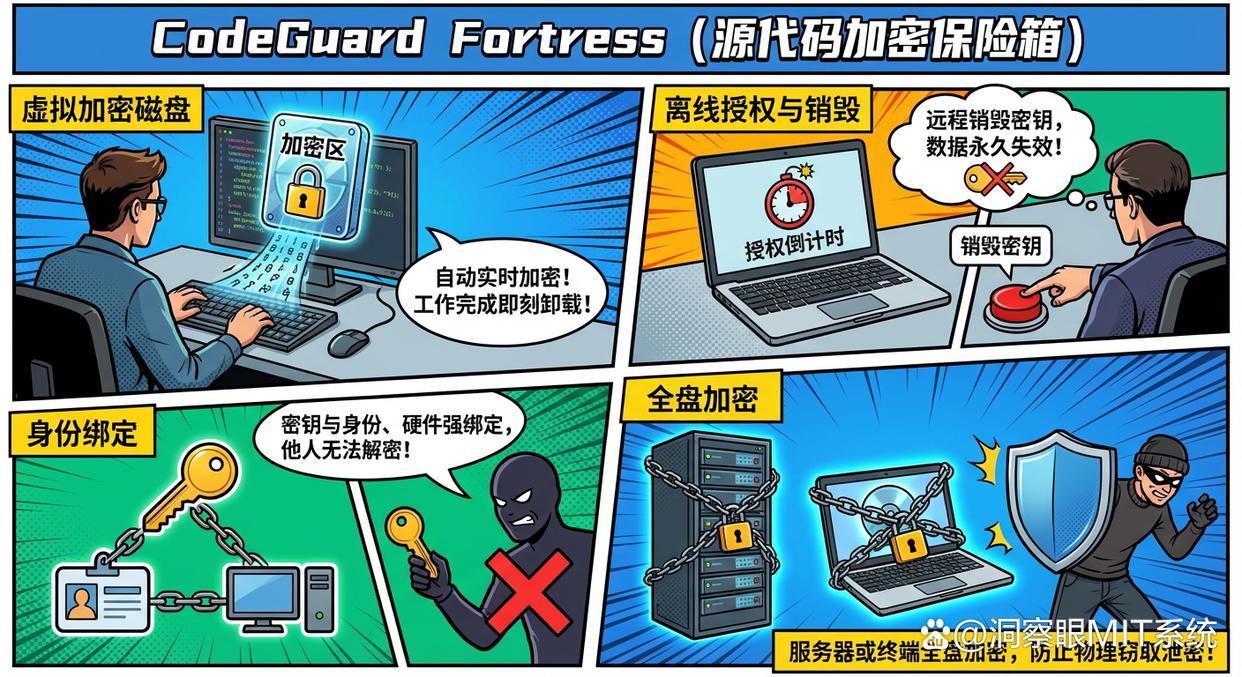
5. CodeGuard Fortress (source code encryption safe)
This is a software that focuses on "deep encryption" and its logic is very pure: no matter where the code is, as long as it is encrypted, it is safe. It is often used as a complement to other anti-leak measures, providing a final impenetrable line of defense.
Main functions:
Virtual encrypted disk: Create a virtual encrypted disk partition on your computer, and all source code stored in this area will be automatically encrypted in real time. Programmers need to mount and verify their identity first when working, and uninstall immediately after the work is completed, leaving no trace of the code.
Offline authorization and destruction: For scenarios where you need to take a laptop with you on a business trip, you can generate a time-sensitive offline authorization policy. Once the authorization time expires or the computer is reported lost, the administrator can remotely send instructions to destroy the key, making the data in the encrypted area permanently invalid.
Identity binding: Keys are strongly bound to user identities and even hardware devices. Even if the entire encrypted file is copied, it cannot be decrypted on other computers or logged in by other users.
Full disk encryption: Provide full hard disk encryption for servers or specific terminals that store source code to prevent data leakage caused by server theft or hard disk physical disassembly.
6. ObfusCode Shield (code obfuscation and packing tool)
The role of this software is in the final step of source code compilation and packaging. Its purpose is not to prevent the source code from being taken away, but to make the taken away code "worthless", greatly increasing the difficulty of reverse engineering and plagiarism.
Main functions:
Name confusion: Replace class names, method names, variable names, etc. in the code with meaningless short characters (such as a, b, c), making the code logic extremely difficult to read and understand.
Control flow flattening: Disrupting the original code execution flow and converting it into a huge and complex switch-case structure makes reverse analysts fall into a logic maze.
String encryption: Encrypt all plaintext strings in the code (such as prompt information, URL), and then dynamically decrypt them at runtime to prevent key functions from being located through search strings.
Anti-debugging and anti-tampering: A detection mechanism is embedded in the code. If it is found that the program is being debugged or the program file has been modified, it will immediately crash or execute wrong logic to resist cracking.
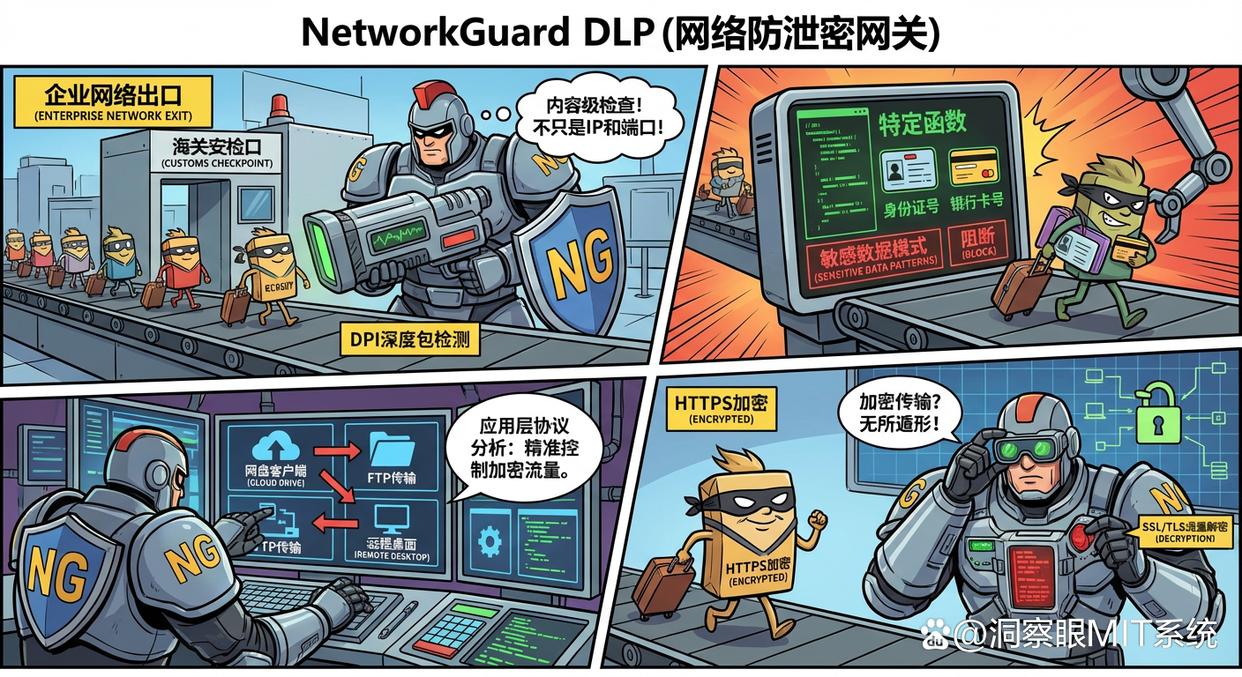
7. NetworkGuard DLP (network anti-leakage gateway)
Unlike the "Insight Eye MIT System" that works on terminal computers, this software is deployed at the enterprise's network exit, like a "customs security checkpoint", to conduct in-depth inspections of all network traffic flowing out of the enterprise, focusing on preventing leaks through network channels.
Main functions:
Deep Packet Inspection (DPI): Perform deep, content-level inspection of all packets flowing through the gateway, not just looking at IP addresses and ports.
Data pattern matching: It can identify whether network traffic contains source code fragments (such as specific functions, code structures), ID numbers, bank card numbers and other sensitive data patterns, and block them.
Application layer protocol analysis: It can accurately identify and control encrypted Web upload (HTTPS), FTP transmission, various network disk clients, remote desktop and other application layer traffic through policies.
SSL/TLS traffic decryption: It has the ability to decrypt encrypted network traffic (certificate needs to be installed on the client), thereby inspecting content sent through encrypted channels such as HTTPS, making data leakage under encrypted transmission undetectable.
Conclusion
Source code security is the "Sword of Damocles" hanging over every technology company. From the above analysis, we can see that no one software can conquer the world. The best practice is to use a "combination boxing" strategy to build a defense in depth system.
For example, take Insight Eye MIT System As the cornerstone of terminal protection, it enables comprehensive encryption, control and auditing of local operations.; Cooperate NetFerry Manage secure file interactions with external partners; and use GitSecure Repository Standardize permissions during development. Such a combination can install the strongest "security lock" for your core code assets from source, process to exit.
I hope that today’s sharing can help entrepreneurs and managers re-examine their own data security systems, choose the tools that best suit them, and detect and fill gaps in a timely manner, so that companies can move forward with peace of mind in the fierce market competition.

 Insight Eye MIT System


 Hebei Public Network Security No. 13019902001038